Power & infrastructure
Integrated Energy for High-Performance AI Infrastructure
AI data center development depends on more than land and buildings. EdisonData designs power and infrastructure strategies around the specific requirements of each site and each customer.
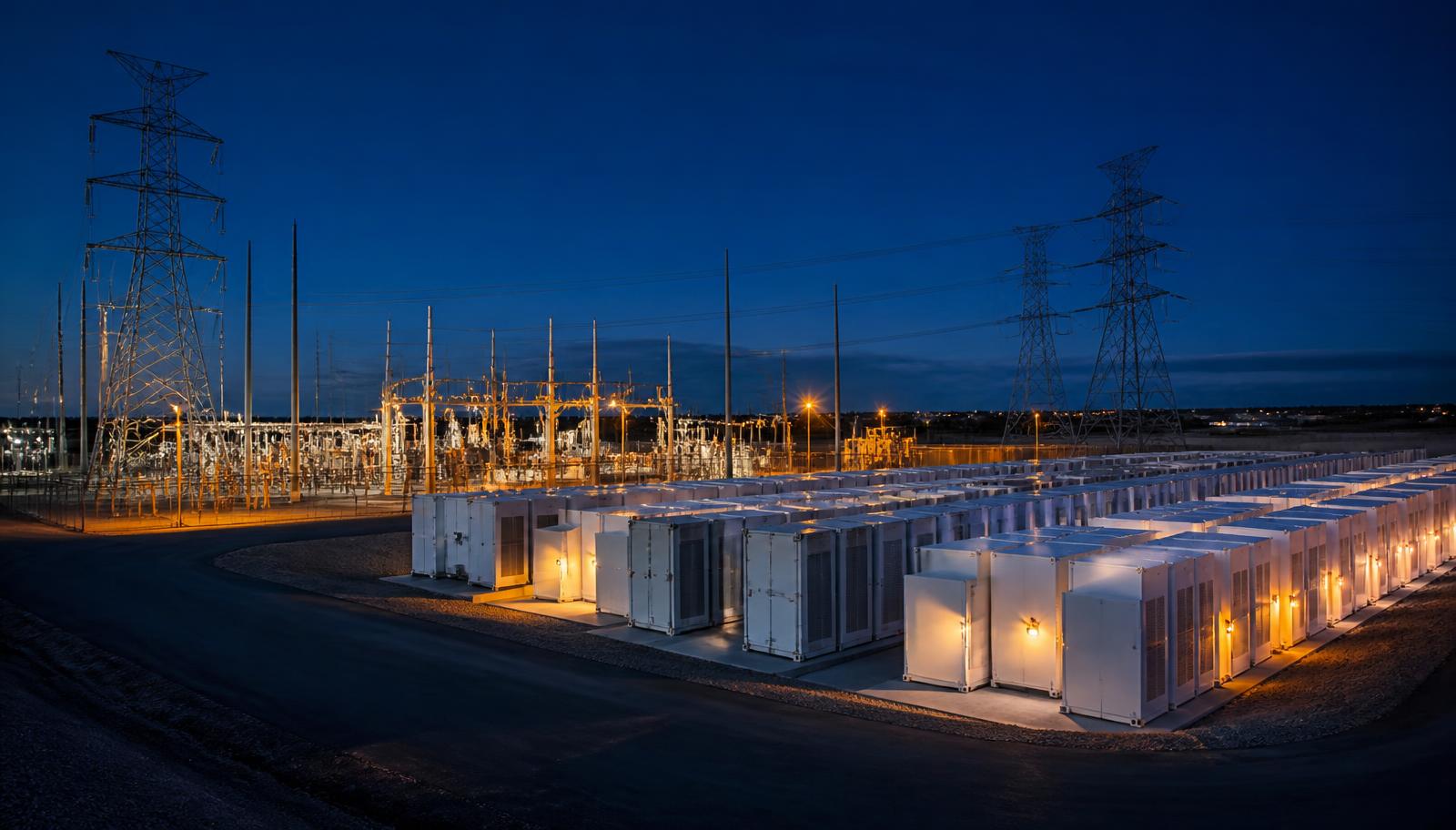
Illustrative rendering. Not a representation of current site conditions.
Energy architecture
One Coordinated System, From Grid to Rack
Electricity, resilience, storage, cooling, controls, and expansion are planned together rather than in isolation.
Utility Grid
On-Site Generation
Battery Energy Storage
Microgrid Controls
AI Data Center Load
Energy systems
Potential Integration Across Generation, Storage, and Distribution
System selection depends on site conditions, utility availability, and customer requirements.
Utility power
Service capacity, interconnection strategy, and coordination with the serving utility.
On-site generation
Generation options evaluated against emissions, fuel supply, and permitting requirements.
Battery energy storage
Storage sized to support resilience, ride-through, and load management objectives.
Solar where appropriate
Solar considered where land, interconnection, and site economics support it.
Microgrid controls
Coordinated control of generation, storage, and critical load across operating modes.
High-voltage distribution
Substation, switchgear, and medium- to high-voltage distribution design.
Facility systems
Cooling, Connectivity, and Operations
High-density AI environments require cooling, network, and operational systems designed as part of the same integrated infrastructure.
Redundant cooling
Cooling topologies designed for continuity of high-density compute operations.
Liquid-cooling systems
Direct-to-chip and rear-door approaches evaluated for AI rack densities.
Fiber connectivity
Route diversity, carrier access, and network resilience planning.
Network operations
Monitoring, alerting, and operational tooling for critical infrastructure.
Security and monitoring
Physical security, access control, and integrated facility monitoring.
Final system configurations depend on engineering, utility availability, interconnection, fuel supply, emissions requirements, fire safety, permitting, and customer specifications. EdisonData does not represent specific energy savings, emissions reductions, uptime levels, project schedules, or available megawatts unless those figures have been independently verified and approved for publication.
Get started
Let's Build the Infrastructure Behind the AI Economy
EdisonData works with property owners, technology companies, energy providers, infrastructure partners, and AI customers to develop scalable data center capacity across the United States.